
Child Therapy at Wellspring
When your child is struggling, so are you. Whether it’s aggressive behavior, overwhelming worries, difficulty making friends, or big tantrums, it is painful (and exhausting) to be stuck in a negative pattern with your child. As parents and caregivers, we want to do all that we can to help our children thrive.
What to Expect
Because kids do not process experiences the same way adults do, child therapy looks different. Your experience with your children at Wellspring may also look different from what you expect because of our practice-wide focus on systemic change. We partner with families to bring growth and understanding. We include regular parent sessions to help caregivers understand their child’s progress and learn about ways to support them at home. You can read more about our expectations for child, teen & family therapy.
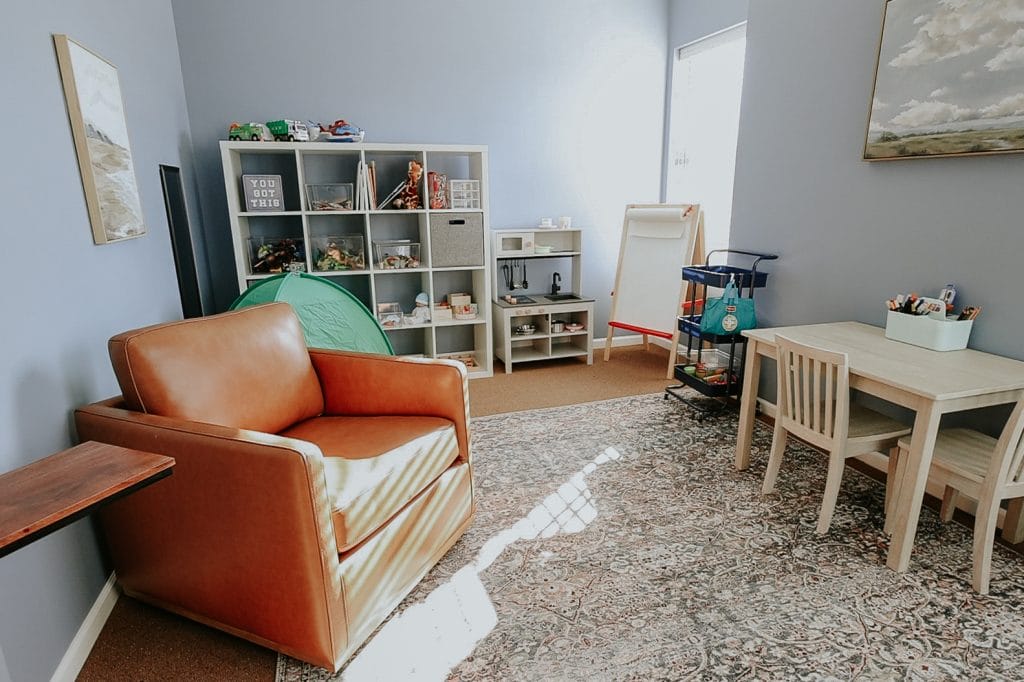
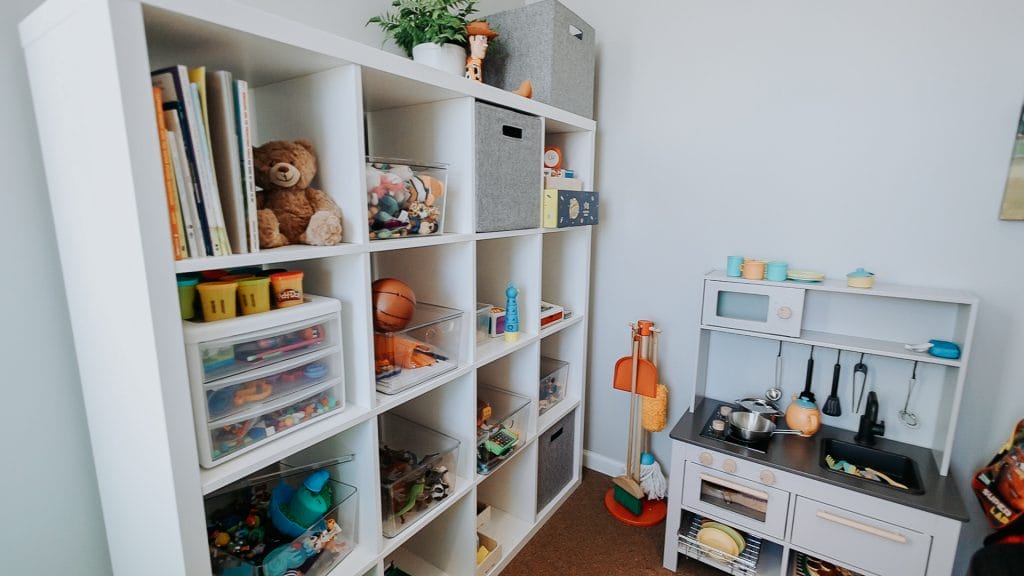
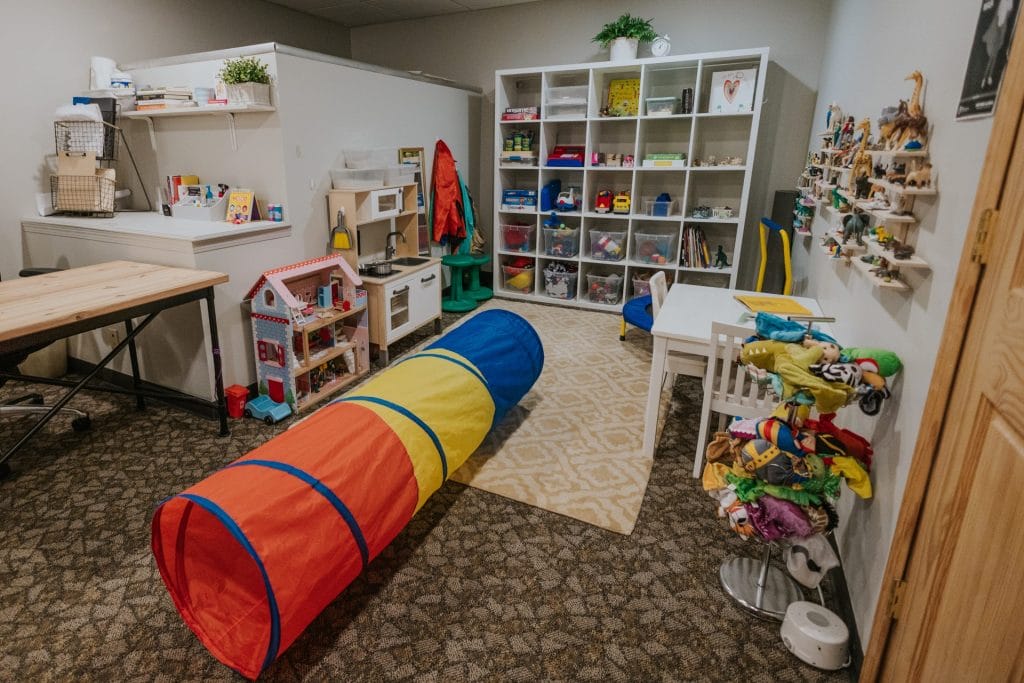
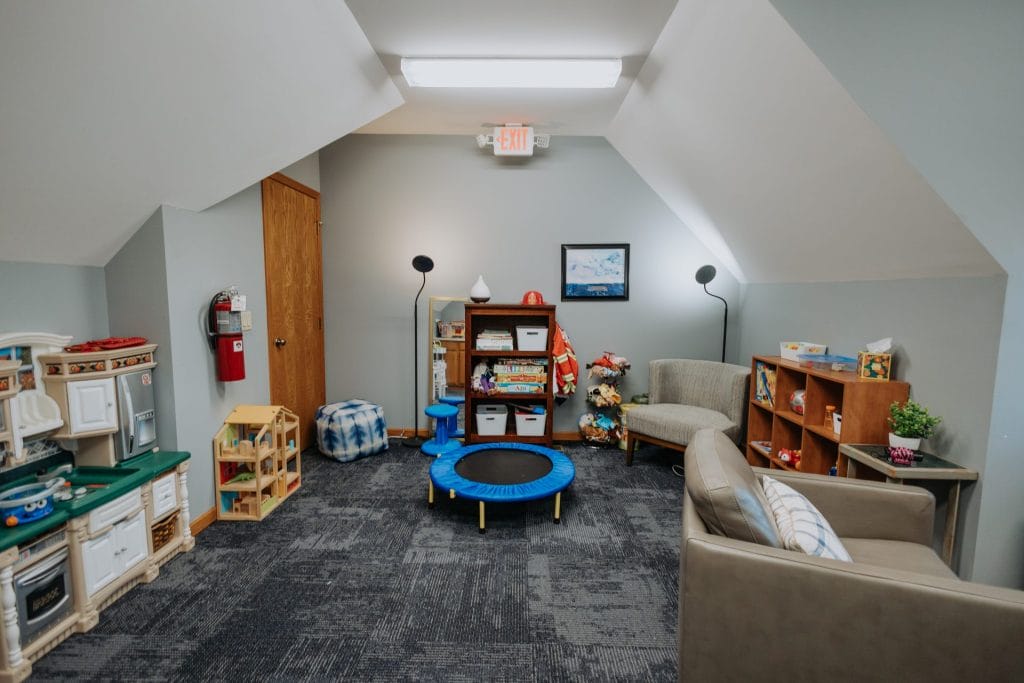
A safe, supportive space matters. Our therapists create a warm and consistent environment where children feel safe to explore feelings, build trust, and gain a sense of control. Our play therapy spaces feel like spaces designed for kids because they are! When spaces feel safe and welcoming, children are more likely to engage in play and begin the therapeutic process naturally.

How It Works
At Wellspring, we engage our youngest clients (typically ages 2-12) in their most natural language of play. Play Therapy and child counseling use evidence-based practices and techniques (Association for Play Therapy) to engage and work with children and their parents to find new ways to address old problems.
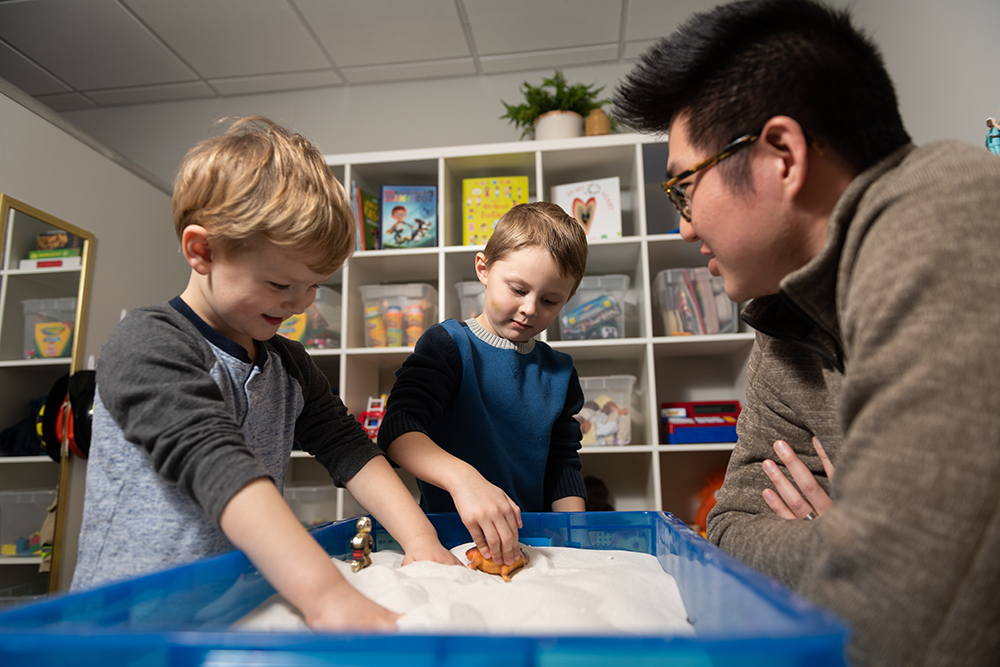
Play as a language: Children often do not have the vocabulary to express their thoughts and feelings yet. In play therapy, kids are able to express their thoughts and feelings through mediums like art, role play, dress up, and make-believe play. For example, kids can use a sand tray and miniature figures to safely express big and challenging emotions and thoughts. The sand tray offers kids and adults a chance to process and reprocess events in the past, present, and future to make sense of their thoughts, feelings, and everything in between!
While it may look like “just playing,” the therapist is intentionally observing, tracking, and reflecting the play to help the child process emotions, build coping skills, and practice new ways of relating. Just like any therapy experience, emotional growth and skill-building take time. Throughout the therapeutic process, children can work through challenges such as anxiety, trauma, grief, behavioral concerns, or family challenges, while developing emotional regulation, problem-solving skills, and confidence.
Overall, play therapy meets children where they are and helps them heal, grow, and thrive through a developmentally appropriate and effective approach. Curious to learn more? Check out this short video by the Association for Play Therapy.
Click here to read our featured story in the InVironments Magazine!
Frequently Asked Questions About Child Therapy
Yes! You are the expert on your child. In order to do the most good, therapists partner with parents and caregivers to gain information on how the child is struggling. Some sessions might include the whole family, just parents, just the child, or a mixture of the two. Some sessions require more parent engagement. Older kids may wish to have more individual time and invite parents to “check in” regularly.
Yes. We understand your desire to “screen” a child therapist to make sure that they’ll be a good fit for your child. Most often, parents meet with the counselor for the first session (either the entire session or the initial part) to share their concerns and get a feel for how the therapist works.
It depends! Generally, if your child is spending any time at all with either parent, then both parents are strongly encouraged to be a part of therapy. Why? Because, as parents, whether you’re together or separated, you have different thoughts and perspectives on your child that are incredibly valuable to the therapist and the process of therapy. If the child is spending any time in the home of either parent, you may notice similar or different
behaviors that can provide insight into how we can help you and your child. Depending on your situation, you may prefer to schedule individual parent sessions with your therapist, or you may prefer to meet with your therapist together. If you ever have any questions or concerns, never hesitate to ask.
We make every attempt to meet your child where they are at and incorporate their likes and strengths into the session. This may be done using games, toys, sand-tray, metaphors, books, and even coloring. For older kids and adolescents, our therapists are ready and willing to discuss the latest thing that has captured their attention. Through our child counseling services, we are able to tailor sessions for your child’s needs by developing a therapeutic relationship with your child over time.
Wellspring Center for Counseling offers child therapy at three Illinois locations: Elgin, Sycamore, and West Dundee. Each office provides licensed therapists who work with children to support emotional growth, build coping skills, and navigate life’s challenges in a safe, compassionate setting.

 847-707-2689
 Contact Us
